The wat
Wat Kiew Nor Intharam is one of the old wats of Chomphet District, Luang Prabang. It is home to an ancient, original Buddha image which we call the White Buddha (Phra Phuttharup Ong Khao), or Luang Pho Khao — an ancient and sacred image, held in special reverence at the wat. Wat Kiew Nor Intharam stands on the Xieng Men side of the river, beside Phou Nang ("Lady Mountain"), whose own history reaches back to former times, in Chomphet District, Luang Prabang. The wat is home to a large community of monks and novices — more than any other wat in all of Chomphet District.
Our wat is an ordinary wat, like any other. The novices study at the monastic school, much as children do at an ordinary school, but the school puts Pali and Dhamma first.
The abbot
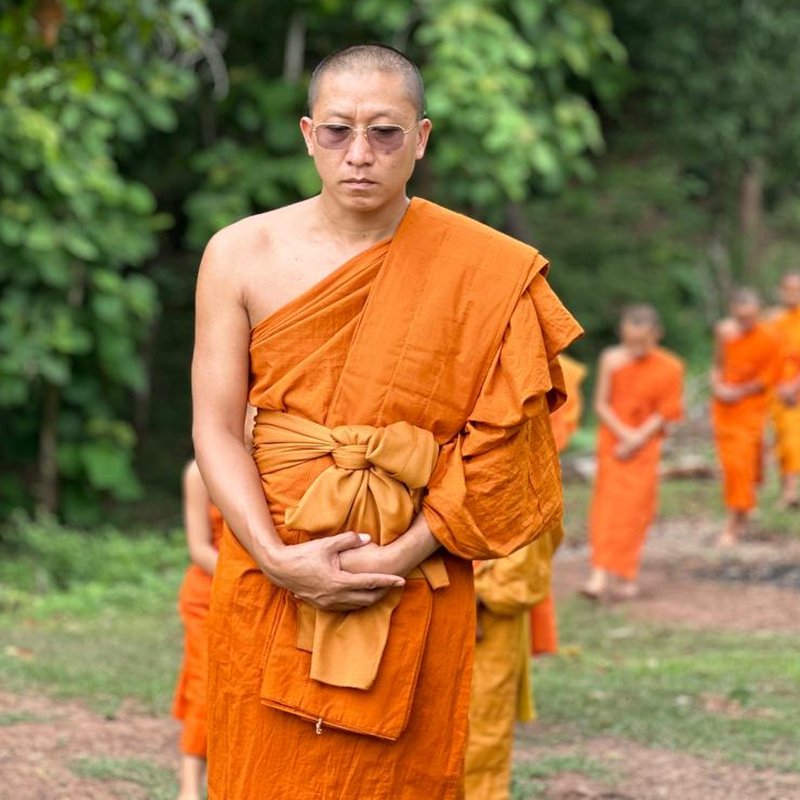
Sabaidee (greetings). My name is Phra Sengphet Santamano. I am 38 years old, with nine rains (phansa) as a monk. I took higher ordination in 2016 at Wat Xieng Thong, in the city of Luang Prabang, and I have now been at Wat Kiew Nor Intharam for seven years. My preceptor — the monk who ordained me — is Phra Ajahn On Kaew Kittiphaddho, abbot of Wat Pa Pha O, Luang Prabang, who is the ecclesiastical head of the Sangha for Luang Prabang Province.
The monks and novices
Wat Kiew Nor Intharam has more monks and novices than any other wat in Chomphet district: twenty-five in all, seven monks and eighteen novices.
The day begins early. The monks and novices divide into groups and go out on the alms round, then return to eat the morning meal together at the wat. After the meal the novices get ready for school, where they stay until the evening; when school ends they walk back to the wat. Once home they clean and sweep the grounds, then bathe, and when the time comes they gather for evening chanting, followed by sitting meditation. The sitting lasts about five to ten minutes, longer when there is time. Evening chanting starts at about half past five; as a rule, by six o'clock everyone is chanting together.
The monks and novices of Wat Kiew Nor Intharam live in great harmony. When there is work to do at the wat, carrying firewood or any other task, we do it together, building together so that the wat may grow and flourish.